


In June about five Boeing 747 loads of seasonally adjusted Chinese tourists arrived in Australia every day. For the year to June, the total was 769,000 -- a record number -- and second only to New Zealanders. More importantly, Chinese tourists stay the longest and spend by far the most: $5.1 billion in the year to March, according to Tourism Australia data, or $7,343 each -- double what the Kiwis spend.Apparently only 5 per cent of Chinese actually own a passport so there is a fair bit of upside potential there, although it's important to note that most Chinese are still poor. Despite China's rapidly growing economy over recent years, overall China is still a poor country, ranking 82nd in the world for Gross National Income per Capita (measured in US dollars) according to the World Bank. This puts it just above Namibia, but below Iraq and Turkmenistan. Australia ranks third.
Nearly one in ten international tourists worldwide is now Chinese, with 97.3m outward-bound journeys from the country last year, of which around half were for leisure. Chinese tourists spend most in total ($129 billion in 2013, followed by Americans at $86 billion) and per tax-free transaction ($1,130 compared with $494 by Russians). More than 80% say that shopping is vital to their plans, compared with 56% of Middle Eastern tourists and 48% of Russians. They are expected to buy more luxury goods next year while abroad than tourists from all other countries combined.Supposedly, the number of Chinese tourists will double by 2010 and their spending will triple, although there is no indication how these numbers were arrived at. It's China so anything I suppose is possible.


anything that raised the death rate schedule –war, disorder, disease, poor sanitary practices, or abandoning breast feeding – increased material living standards. Anything that reduced the death rate schedule – advances in medical technology, better personal hygiene, improved public sanitation, public provision for harvest failures, peace and order – reduced material living standards.In other words, vice equalled virtue and virtue equalled vice. Even gradual improvements in technology increased population and therefore did not lead to lasting increases in living standards. Hobbes, Clark contends, was wrong; man was better off in his natural state.


Japan, unlike the East Asian “tigers”, seems to have grown both through high rates of input growth and through high rates of efficiency growth. Today’s fast-growth economies are nowhere near converging on US efficiency levels, but Japan is staging an unmistakable technological catch-up.

The one-child policy imposed at the end of the 1970s changed the subsequent age structure of the Chinese population quite dramatically and, as a side effect, created a kind of demographic boom for China. Over the next three decades, as the huge population of baby boom children matured and joined the labor force, and a relatively small number of workingmen and women grew old and retired, China’s working population grew much more quickly than the overall population. The number of working-age Chinese grew, if my memory serves, by between 1.5% and 2% a year on average since the late 1970s.The demographic dividend caused by the one-child policy is now of course creating a worsening dependency ratio as a declining number of workers supports a longer-living number of old people.
Because so few children were born after the late 1970s, this surge in the working population was associated with a huge improvement in China’s dependency ratio. A declining number of non-working-age Chinese could be supported by a rising number of working-age Chinese.


Europe does not need capital from foreigners. It is capital rich. In fact it is even a net exporter of capital. The reason certain European governments cannot borrow is not because Europe is capital poor. It is because these countries are perceived to be insolvent, and in altogether too many cases they almost certainly are.
Bailing out an insolvent government cannot help it. It will give it time to work out its problems, many argue, but the historical precedents suggest that the quicker an insolvent country acknowledges its insolvency and demands debt forgiveness, the better off it is in the longer term.
... an increase in foreign money inflows actually will make Europe’s problems worse. Europe needs more demand, not more foreign money. More foreign demand is the opposite of more foreign money.
Remember that a net increase in foreign capital means that foreigners are importing demand from Europe. But Europe needs them to export demand to Europe. More foreign capital inflows is exactly the wrong thing – and in fact what Europe really needs is to increase its exports of capital. Paul Krugman, by the way, makes almost exactly the same point when he says: “It is very difficult in real time to convince people that capital inflows pose a threat, no matter how obvious the numbers seem."
But difficult or not, it is important that policymakers grasp this point and it is important that investors understand the consequence when policymakers fail to grasp it. The trade and currency wars that we are experiencing are nothing more than wars about exporting capital. Exporting capital is exactly the same as importing demand. Every country that wants to run a trade surplus is also by definition a country that wants to export capital.
And of course every country that accepts net foreign capital inflows must also accept a trade deficit (or, more correctly, a current account deficit). This isn’t a theory. It is an accounting identity.This sort of reasoning is counter-intuitive to many people. Some of my more knowledgeable students look incredulously when I argue that the United States would actually benefit from a decline in Chinese purchases of US Treasury securities because it is popular wisdom that China holds all the power now that the US is so indebted to Chinese borrowers.
Non-economists may think China, with its huge reserves and 9% GDP growth can weather a trade war more effectively than the US. For example in an otherwise interesting article in the South China Morning Post, Lanxin Xiang, a professor of international history and politics in Geneva, says the following:
China owns too many US government bonds and yet the central bankers have always discouraged the government from entertaining any thought of using them as diplomatic leverage in dealing with Washington. But throughout modern world history, using monetary instruments to achieve diplomatic aims is the norm rather than exception. One notable case was the Suez Canal crisis, when Washington threatened to stop market support for sterling to force the British withdrawal from the Anglo-French colonial expedition against Egypt's nationalist president Gamal Nasser.
I believe Xiang has used the Suez Canal crisis argument before, and it is a very clumsy analogy. The UK desperately needed to import capital from the US in those days to support sterling, whereas today the US is eager to get China to stop exporting capital (there is, remember, no difference between intervening to weaken a currency and exporting capital, and Washington clearly wants China to reduce its intervention). It isn’t likely that a threat by the US to stop exporting capital in the former case is as credible as a threat by China to stop exporting capital in the latter case, but of course this is the kind of mistake that many who don’t understand central banking or the balance of payments mechanism make over and over again.
In fact most economists (economic historians and trade economists, anyway) know that trade wars usually switch demand from surplus countries to deficit countries. Instead of hurting the deficit countries, this actually causes faster growth in the latter, albeit at the expense of slower growth in the former. Trade and currency war, in other words, is bad for the world but not necessarily bad for the deficit countries.The thing to note here is that Chinese capital outflows involve the export of demand from the United States and therefore an increase in unemployment in the United States. An orderly fix of the global imbalances (see here for a 2010 discussion) will be required if the world is to avoid an eventual trade war. This means adjustments on both sides of the question, but if China continues to pursue an investment and export-led growth model its current account surpluses must be matched somewhere with current account deficits. The United States has been this major deficit country.
Chinese “lending” to the US government is not a discretionary decision that they can choose or not choose to do – it is the automatic consequence of a growth model that requires a trade surplus to absorb domestic overcapacity – the idea that the US government needs foreign funding is based on a very fundamental misunderstanding of the balance of payments. The US government does not need foreign buyers for its bonds. On the contrary, it is in Washington’s best interest that foreign central banks sharply reduce their purchases of USG bonds.He also highlights the need to make distinctions between 'deficits':
foreigners do not fund fiscal deficits. They fund current account deficits, and as an accounting requirement the size of the current account deficit is exactly equal to the net foreign funding. Capital account inflows must exactly match current account outflows.
The direction of causality can go either way. If investment in the US is so high, for example, that it is impossible for US savings to supply the full demand (as occurred during much of the 19th Century), then the US must import foreign capital to make up the shortfall. The difference between domestic US investment and domestic US savings, of course, is equal to the net amount of foreign savings imported into the US, and is also equal to the US current account deficit. In this case soaring US investment causes the US to have a current account deficit and leads foreigners to fund this excess investment.This has some relevance to Australia because we have historically had an excess of investment over saving meaning that we generally run a current account deficit. This is not necessarily a bad thing if the investment is productive. That's a big 'if' and much of the foreign capital inflow into Australia involved household borrowing to buy (and, to a lesser extent, to build) houses, thus bidding up the prices of houses. This game has seemingly finished for the moment at least, partly because the household sector has such high levels of debt at around 150 per cent of disposable income (down from 160 per cent a few years ago).
But the direction of causality can also run the opposite way. Suppose foreign central banks have decided for domestic reasons (for example in order to generate domestic employment) to accumulate hoards of US government obligations and so run a trade surplus. This will cause a surge of net capital inflow into the US. In that case the US must run a current account deficit equal to the net inflow.
There are several ways this can happen. One way is for the surge in foreign capital inflows to cause a sharp rise in what otherwise would have been unnecessary or unfunded investment – the real estate bubbles in Spain and the US might be obvious examples of this. Another way is for foreign savings to displace domestic savings, perhaps by funding a credit-fueled consumption boom.
But whether for good reasons or bad reasons there is no escaping the fact that net capital imports into the US, whether pulled by domestic needs or pushed by foreign needs, must be accompanied by a rising US current account deficit – this is just arithmetic. ...
Remember that saying that the US needs more foreigners to buy US government bonds in order to keep interest rates low is exactly the same as saying the US needs a bigger current account deficit in order to keep interest rates low. This cannot be true.In a recent newsletter (20 March 2012) Pettis makes some astute observations about China and the way that many commentators assume that the Chinese leadership can fulfil their intentions. He argues that this is because they focus on intentions rather than constraints.
This failure to focus on constraints rather than intentions is why I think most analysts have gotten China wrong in the past five years. By misunderstanding how China’s growth model works, and how the functioning of the model forces certain kinds of behavior and prevents others, they have been much less skeptical about Beijing’s ability to execute its intentions than they should have been. I think we should be much less impressed by what the leaders say they will do, and much more concerned about how the constraints they face will limit what they actually can do.This applies not just to China, but for any country and particularly Europe right now:
This is an issue not just for China, by the way, but for any country. For example, knowing the constraints imposed by the functioning of the balance of payments I am wholly unimpressed by what many senior German and European leaders say they expect to happen in Europe. The fact is that if we hope to see net repayments by peripheral Europe to Germany, we will also have to see a reversal in their respective current account positions, and so far this seems unlikely. Without the latter, however, the former is impossible, no matter how determined Madrid, Rome, Berlin and Paris might be to reduce debt in an orderly way.
The first is that the fundamental imbalance in China is the very low GDP share of consumption. This low GDP share of consumption, I have always argued, reflects a growth model that systematically forces up the savings rate largely by repressing consumption, which it does by effectively transferring wealth from the household sector (in the form, among others, of very low interest rates, an undervalued currency, and relatively slow wage growth) in order to subsidize and generate rapid GDP growth.The consequence of this is that investment levels must be kept very high. The question is how much investment can the Chinese government continue to make beyond the historically highest levels for any country ever!
The first reason is the debt dynamics. Every country that has followed a consumption-repressing investment-driven growth model like China’s has ended with an unsustainable debt burden caused by wasted debt-financed investment. This has always led either to a debt crisis or to a “lost decade” of very low growth.
At some point the debt burden itself poses a limit to the continuation of the growth model and forces rebalancing towards a higher consumption share of GDP. How? When debt capacity limits are reached, investment must drop because it can no longer be funded quickly enough to generate growth. When this happens China will automatically rebalance, but it will rebalance through a collapse in GDP growth, which might even go negative, resulting in a rising share of consumption only because consumption does not drop as quickly as GDP.Pettis quickly points out that he is not suggesting a sudden China collapse, rather he is suggesting that re-balancing must occur eventually either in an orderly or disorderly fashion. It is debt that will eventually force China to re-balance.
China bulls continue to argue that there isn’t yet a significant overinvestment problem in China, which implies that debt is not rising at an unsustainable pace, or if it is, that it can continue rising for many more years before the debt burden itself becomes unsustainable.
This also implies that the consumption imbalance is temporary and can resolve itself gradually and over time as the benefits of earlier investment begin to emerge and eventually overwhelm the total costs of those investments. Of course if this is true China does not need a surging current account surplus because if investment isn’t being wasted it can keep investment rising faster than savings for many more years. The current account surplus, remember, is just the excess of savings over investment.
The key vulnerability of my argument, then, is whether or not you think investment in the aggregate is being misallocated in China and has been for many years. If you agree, then you must also agree that consumption must become a greater share of GDP over the next five to ten years. What’s more, you should also agree that the only way to increase the consumption share of GDP is to increase the household income (or wealth) share of GDP.
China, in other words, must stop transferring income from households to the state and in fact must reverse those transfers. As Chinese household income and wealth become a greater share of the overall economy, so will Chinese consumption. As I see it, the various ways in which this transfer can take place can all be accounted for by one or more of the five following options:
1.Beijing can slowly reverse the transfers, for example by gradually raising real interest rates, the foreign exchange value of the currency, and wages, or by lowering income and consumption taxes.
2.Beijing can quickly reverse the transfers in the same way.
3.Beijing can directly transfer wealth from the state sector to the private sector by privatizing assets and using the proceeds directly or indirectly to boost household wealth.
4.Beijing can transfer wealth from the state sector to the private sector by absorbing private sector debt.
Different rebalancing scenarios have very different implications for growth and distribution. For Pettis, the real costs of rebalancing must fall on the state sector.5.Beijing can cut investment sharply, resulting in a collapse in growth, but it can mitigate the employment impact of this collapse by hiring unemployed workers for various make-work programs and paying their salaries out of state resources.Notice that all of these options effectively have China doing the same thing: In each case the state share of GDP is reduced and the household share is increased. There are however very big differences in how the changes are distributed among various parts of the household sector and the state sector.
Remember that for the past twenty years, and especially in the past ten years, the state and business share of a rapidly growing economic pie was also growing, which meant extraordinary growth in the value of assets controlled by the state sector. The household share of the growing economic pie of course contracted, but the rapid growth in the pie ensured that households nonetheless saw their income grow quite rapidly even as their share of total income declined.
When we reverse this process, as we must if there is to be rebalancing, any slowdown in GDP growth will be minimally felt by the household sector (if the rebalancing is managed in an orderly way), but even a scenario of very high GDP growth must result in much slower growth in the value of state sector income and assets. Of course if GDP growth actually slows sharply, which I expect it will, the growth in the value of state sector assets will collapse and perhaps even turn negative.
In my opinion this change in the growth rate of the state sector will be at the heart of the political economy choices, and difficulties, that Beijing will be forced to address in the nest few years. It is likely to be much easier to keep political leaders happy when the value of the state sector is growing comfortably in the double-digit range than it is when it is growing in low single digits, or even contracting.The issue then, according to Minxin Pei, is whether the CCP will be 'happy' to let this happen. Pettis discusses economic constraints, whilst Pei talks about political constraints. Pettis goes through the positives and negatives of all the options outlined above:
As I see it these are ultimately the only options – or at least the major set of options – Beijing can choose to follow over the next few years if it wants to avoid a debt crisis. Of course Beijing doesn’t have to choose only one of the above options. What is more likely in fact is that policymakers end up choosing a combination.
For example we can posit the following. Beijing can choose an intermediate path between the first and second options, and raise interest rates sharply over the next two or three years while also raising the value of the RMB by 10-15% in an overnight maxi-revaluation.
In order to protect workers from the resulting surge in unemployment, Beijing can instruct state-owned companies and local governments temporarily to hire a huge number of workers for make-work programs (the fifth option) and initially pay for this by increasing borrowing (the fourth option). At the same time it can begin a massive program of privatization, which should include transferring ownership of land to peasants, and selling off assets and using the proceeds to shore up the social safety net and to pay down debt in the banking system.
This would certainly work economically to rebalance China in a way that guarantees fairly high growth rates over the rest of the decade, but is it politically possible? Here I would defer to Minxin Pei, who might argue that the scale of privatization required is not possible politically. In that case China would end up being forced into rebalancing via the fourth option, with a long-term surge in government debt.
And this is my point. If you believe my assumptions are correct, then you should agree that China has no choice but to follow one or more of these paths. If privatization is not an option, then a collapse in the economy caused by a rapid adjustment in interest rates and the currency (the second option) might be. If that is ruled out, then perhaps the outcome will be a surge in government debt (the fourth option again), and so on.
This what I mean by the economic constraints that limit the choices Beijing can make. It doesn’t matter what anyone thinks or wants Beijing to do, if the plan violates the economic constraints, it cannot be done. To be really complete we should outline the political constraints, the environmental constraints, the demographic constraints, the external trade constraints, and so on, although of course this is way beyond my ability, but each of these exercises allows us to escape from the confusion of stated intentions and to focus on the possible.Interesting times ahead.

Unlike the Asian tigers, the two giants' success has nothing to do with the quality or singlemindedness of their reforms. It has everything to do with their size. It's a question of multiplication. Even a moderately positive policy measure will have a big effect if it releases the productivity of hundreds of millions. Even a minor gain in productivity will have global effects when multiplied by hundreds of millions. To be bigger than Europe or the US, China and India need to be only one quarter as productive per person and they are closing fast.... Even as the aggregate size of the giants' economies surpass those of developed countries, they willWesley argues that size provides a wider margin for error:
remain poor societies. This means that even when they are huge, these economies will still contain within them plenty of individual-level energy that will stimulate further strong economic growth.
The size of the giants means that they can afford to be less concerned about the effects of corruption, crumbling infrastructure and slothful bureaucracies on international investment. India's poor governance, bad infrastructure and high corruption are estimated to wipe nearly 2 per cent off its annual economic growth rate, and still it grows at 8.5 per cent. The World Bank estimates that governance failures suppress foreign direct investment to China by 30 per cent, yet it remains the world's largest destination for FDI. Their countries' size has also given the giants' governments greater latitude to experiment with reforms through trial and error, without risking the performance of the whole economy.Taken literally, Wesley's large-ism means that policy doesn't really matter that much although he does mention the importance of key early liberalising reforms. But if size were everything then why were China and India so stagnant for such a long period of time after decolonisation in India and the victory of the communists in China? It was policy that put these countries on the path to development, not size; although once liberalising policies were enacted size has mattered in the way that Wesley argues.But it is also policy that will help to maintain their success. As I've noted before, there is a delicious irony in the fact that economically liberal policy-makers and commentators have so much faith in the wisdom and prowess of the Chinese Communist Party!
Whatever happens to them in the decades ahead, the rise of China and India will profoundly reshape the world of the 21st century. If they continue to grow at about their present rates the global economy will re-centre on them. Even if they suddenly stop growing at these rates and lapse back to their preboom momentum, they will continue to be important economies whose consumption still drags the global economy this way and that. If their detractors are right, and they are headed for a serious economic and social meltdown, the fallout from their collapse will define the rest of the century.
All of this holds irrespective of what happens in the rest of the world. The US may be headed for a renewed spurt of innovation-led growth, similar to what happened in the early 90s. Europe may find new sources of dynamism. Japan may too. But none of this will change the fact China and India have arrived as significant shapers of how the world works, and their preferences, enthusiasms and allergies will affect the choices other societies face. The tidal effects of the growth rates of the Asian giants reach further, faster and deeper in an increasingly globalised world. Emerging economies -- particularly very large ones -- are almost always more volatile than established ones, making their fate much more central to the fortunes of the global economy than their absolute economic size would suggest. Their scale and rate of change within an increasingly seamless global economy enables, displaces and reshapes economic activity and its social and political consequences far beyond Asia. For example, at their present rates of growth, China and India are adding more than 40 million workers to the global economy annually, the equivalent of the arrival of a France in the world economy every year.While Wesley outlines the extensive geo-strategic and geo-economic consequences of Asia's rise, he is pessimistic about Australia's Asian future because he believes Australians are too complacent about the need for change:
Australia did very well out of the rise of Asia even though Australia didn't change, as it was repeatedly advised to. Australians kept their alliance with the US and their marked comfort with Western values and societies over Asian societies. Lowy Institute polling has consistently shown Australians overwhelmingly support the alliance with the US. They consistently feel more warmly towards Western countries -- New Zealand, Canada, France, Britain and the US -- than Asian countries. And those Asian countries they prefer are the most Westernised: Singapore and Japan. ...He also worries about the lack of popular focus on Asia and about the inexperience of Gillard and Abbott on the diplomatic front. I'm not really sure how one would properly measure societal insularity, but my gut feeling is that we're probably less insular than we were in the past. Still it is not surprising that Australians feel more comfortable with Western values because we are a Western country. Nor is it surprising that they think that keeping the US Alliance is a good thing, having a good relationship with the world's most powerful country is a no-brainer.
The speed and scale of the changes we are witnessing in Asia are unprecedented. Twenty years ago China and India together accounted for less than one tenth of world production. Today that share has doubled, and by the end of this decade it is expected to be over a quarter of world production. China and India will then account for more output than the US and Japan combined. By then it will be apparent that Asia has not only become the world’s biggest production zone, but also its biggest consumption zone.
So, concerned as we were by the overhang of the financial crisis, the floods, cyclones and earthquakes – we knew when we put the Budget together that our prospects were still bright and our economy would not be knocked off its long-term path.
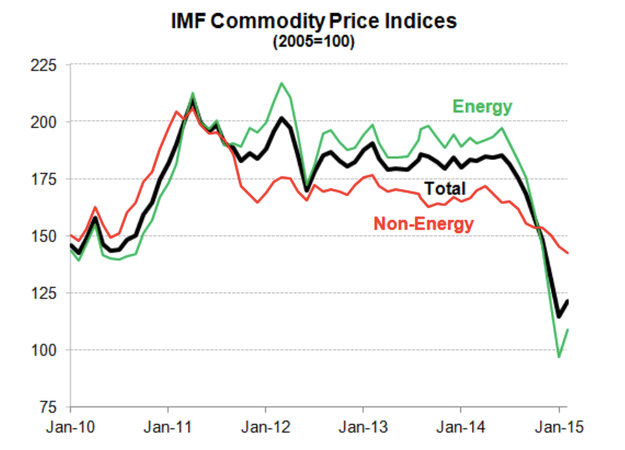
Helped by strong demand from Asia we have seen a truly stunning rise in the prices for our commodity exports. Right now, our terms of trade are their highest sustained level in 140 years.
The huge global demand for our resources is also driving an investment boom the likes of which this country has never seen. ...
We are familiar with Asia’s role in driving our mining boom. Less understood are the opportunities for the broader Australian economy from the expansion of the Asian market for goods and services as income, wealth and living standards rise in the region.
One of the key points we make in Budget Statement Four, and what I want to stress to you today, is that in many ways the mining boom is just the first taste for us of the huge shift in the world’s economic centre of gravity in Australia’s favour.
As well as generating huge demand for our energy and mineral resources, sustained rapid growth in Asia is delivering hundreds of millions of people into a burgeoning Asian middle class. By 2020 there is expected to be more middle class consumers in Asia than in the rest of the world combined. The implications for high-value knowledge economies like Australia stretch well beyond the mining boom. ...
Australia has always been at its best when embracing the forces of change rather than resisting them. We began 200 years ago with wool for the English market, and we extended over the following century into gold, meat and dairy. By World War I we were extending into manufactures, a trend that became even more pronounced during and after World War II.
Then we had the mining boom of the 1960s, the increasing exports of coal and iron ore and bauxite. At first gradually and then with greater speed we diversified our exports away from the UK to Japan and China and emerging Asia. We began to export more of our manufactures, and our services.
It is a mistake to think of Australia as an agricultural economy last century, although our farming sector made a huge contribution. Today it’s an oversimplification to think we’re just a resources economy, or that the time of our manufacturers has passed. Our manufacturers have innovated and moved with the times – and they will continue to do so, even in the face of the mining boom.
But the story that lies behind our economic development is the gradual rise of service industries in Australia. There are more than four times as many Australians in professional, scientific and technical services than there are in mining. There are four times as many in education and training as there in mining.
I make these points to you today because I want to remind you that while mining has rarely been more important to the Australian economy than it is today, most of us make out living in creating and delivering services. This is why the vast shift of world production, consumption and wealth into the region of which we are a part is so important to our future.
Not only for the opportunity to sell our coal and iron, our ore and gas and our other mining products, as important as these exports are. Not only for the opportunity to sell our wheat and wool and meat, as important as those exports are. Not only for the opportunity to sell our manufactures. But also for the chance to continue to transform our economy into one which increasingly exports services. ...
Now the point I want to make to you about this future for Australia is that our success in the Asian Century, in the mining boom and beyond, will rely more on education and training than anything, and that depends heavily on investment by governments.
As the media have breathlessly reported, China has just overtaken Japan as the world’s second largest economy, and bids fair to knock the United States from the top spot within 20 years. Ever since Deng Xiaoping embarked on his “second revolution” in 1978, introducing free market reforms and opening up to the outside world, China’s economy has grown by almost 10 percent a year — one of the most sustained expansions in history. ...
The crucial question is: how will China use its new-found wealth?
The traditional answer is that rich countries tend to equip themselves with the sinews of war in order to enhance their position at the expense of rivals. According to the dominant economic philosophy of the 18th century — mercantilism — wealth and power are interchangeable, each helping in the acquisition of the other.
Thus Britain used its economic predominance after the Industrial Revolution to establish global hegemony. Protected by the fleet, its multiplying colonies supplied the mother country with raw materials and bought her manufactured goods. But by 1914 Germany was easily out-producing Britain, and Kaiser Wilhelm’s challenge to the Royal Navy’s supremacy did much to precipitate the First World War.
However, history does offer alternative answers — and the case of America is particularly pertinent. The economy of the United States overtook that of Britain in the 1870s, and by 1914 it was nearly three times as large. A small island making steam engines by hand inevitably fell behind a bountiful continent that mass-produced motor cars on assembly lines.Brendon's expertise on the British Empire. The major question is whether China's rise will be more like Germany's or the United States' challenge to Great Britain.
It also seemed inevitable that the United States, particularly under the internationalist leadership of Presidents William McKinley and Theodore Roosevelt, would mount its own challenge to the British Empire by translating its economic strength into military might. Uncle Sam did arm, of course, during the conflict with Spain and World War I, creating an outstanding Navy.
But for the most part, the nation’s business was business. In the 1890s it was suggested that the State Department should close down because it had so little to do. And during the isolationist period between the two world wars, when at its peak America was responsible for nearly 40 percent of the world’s manufacturing output, the United States Army was around the 17th-largest on the planet.
In other words, the military of the world’s richest nation amounted to hardly more than a border constabulary armed with obsolete equipment like 1903 Springfield rifles. During the Depression, cash was so tight that its best officer, a bald-headed major named Dwight D. Eisenhower, had to make a requisition for his streetcar fare between the War Department building and the Capitol.
Needless to say, Axis aggression transformed the United States into a military-industrial colossus. It so galvanized a depressed economy that the historian Niall Ferguson of Harvard has been moved to dwell on “the benefits of militarism.”Brendon then canvasses the liberal view that peace promotes prosperity and vice versa - opposed to the realist (mercantilist) idea about power and plenty.
Market forces act in the moral world, said the 19th-century British politician Richard Cobden, like “the principle of gravitation in the universe — drawing men together and thrusting aside the antagonism of race, and creed, and language.” Certainly this is an ideal to which China has at least paid lip service since the end of the cold war, asserting that globalization fosters international cooperation.
Recall that at the start of the new millennium, a consensus existed among China-watchers that the Red Menace was as much of a mare’s-nest as the Yellow Peril. Like the United States before Pearl Harbor, China would concentrate on butter not guns, harmonizing its interests with those of its competitors through the peaceful mechanism of the open market. There was much talk of an entente between China and Japan, even of a Chinese-American alliance to maintain stability, fight poverty, tackle global warming and so on.
No doubt much of this was wishful thinking. Indeed, such soft soap may well have been part of a charm offensive by China, culminating in the Beijing Olympics of 2008, designed to mask the true character of a monstrous tyranny that was made manifest on Tiananmen Square in 1989.
Whatever the truth, informed opinion is now divided about Chinese intentions. Some pundits maintain that the fundamental assumption of China’s leaders is that conflict is part of the human condition, the only way of resolving differences in a perilous world. A recent comprehensive survey of Chinese authors revealed that most anticipate a repeat of the “warring states era in Chinese history.” Is not hostility toward “foreign barbarians” China’s default state?
There are, at any rate, obvious signs that the awakened dragon is flexing its muscles. China’s defense budget rose to be the second highest in the world in 2008, and its naval (particularly submarine) buildup has, in the opinion of the American journalist Robert D. Kaplan, caused “the loss of the Pacific Ocean as an American lake.” In search of markets and natural resources, China is expanding its influence aggressively in Asia, the Middle East, Africa and South America.
On the other hand, China’s 6.6 percent share of global expenditure on arms is dwarfed by America’s 46.5 percent. And, like the United States during and after the reconstruction era, modern China is preoccupied by the problems associated with rapid growth: pollution, corruption, rural poverty, urban overcrowding and troubled labor relations.Above all, its leaders have to keep the lid on the simmering political and ethnic cauldron, while at the same time preventing the economic bubble from bursting — as Japan’s did.
China may well keep its promise, for the moment at least, to follow the path of peaceful development. We can’t know, of course. But doom-merchants predicting that China will topple America from its pre-eminence should recognize that history is not necessarily on their side.

